Snow Flight Rush

Caleb Ryan
| 09-01-2026
 · Sport Team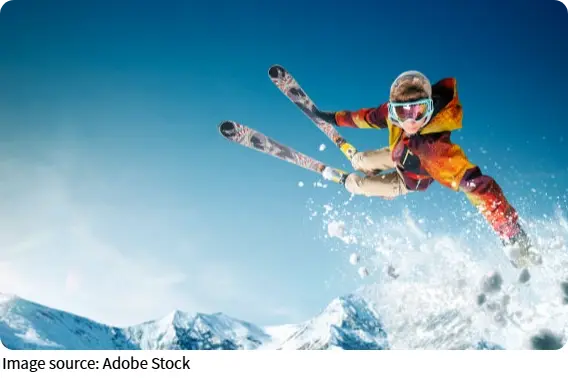
Ski jumping is one of those winter sports that makes us catch our breath just by watching. The moment athletes slide down the ramp and lift off into the air, it feels like they’re flying.
We’re going to explore this thrilling sport together, from its history to the excitement of soaring above snowy hills.
Origins and History
Ski jumping started on November 22, 1808, in Norway, at a place called Eidsberg. Olaf Rye, a Norwegian officer, is often credited with making one of the earliest recorded jumps. Over the centuries, it evolved from a local pastime into a professional sport. Today, the International Ski Federation (FIS) governs the sport worldwide, keeping rules clear and competitions exciting for both athletes and fans like us.
How the Sport Works
In ski jumping, athletes slide down a steep ramp called a “jumping hill.” The goal is to jump as far as possible while maintaining control in the air. We calculate scores based on two main factors: distance and style. Distance measures how far an athlete flies from the takeoff to the landing zone, while style points come from body position, balance, and smoothness of landing. Combining both gives a total score that decides winners.
Types of Competitions
We can enjoy three main types of ski jumping events. First, there are men’s individual competitions, where each athlete jumps alone to achieve the longest distance. Then, women’s individual competitions offer the same thrilling experience on slightly different hills. Finally, team competitions bring athletes together, where each member’s performance contributes to the overall score. Watching a team perform gives us a sense of excitement as we cheer together for every jump.
Equipment Essentials
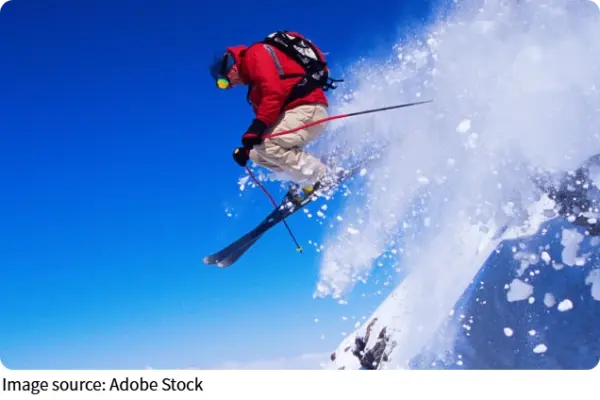
Ski jumping requires specialized equipment to keep athletes safe and effective. The main tool is the ski jumping skis, which are longer and wider than regular skis to provide stability during flight. Ski boots and bindings connect the feet securely, while aerodynamic suits help reduce air resistance. Helmets and goggles protect the head and eyes, letting us watch the jumps safely without worrying about accidents.
Jumping Hills Explained
The jumping hill, or ski ramp, is a critical part of the sport. Hills are classified by size: normal hill, large hill, and ski flying hill. A normal hill has a smaller slope and is great for beginners or early competitions. Large hills allow longer flights, giving us a better sense of speed and height. Ski flying hills are extreme, letting athletes soar up to 250 meters in the air — almost like flying! The design of the hill ensures smooth takeoff, mid-air balance, and safe landing.
Olympic and World Championships
Ski jumping has been an Olympic sport since 1924 for men and 2014 for women. The World Championships started in 1925, giving athletes chances to compete internationally. Ski flying became its own competition in 1972. Watching these events, we feel the tension and thrill as jumpers launch into the sky, with thousands of fans holding their breath until the landing.
Why We Love Ski Jumping
We love ski jumping because it mixes excitement, skill, and beauty. Watching an athlete fly gracefully in the air gives us an adrenaline rush, while understanding the techniques behind each jump makes the experience even more fascinating. It’s not just a sport; it’s an art form on snow, combining physics, courage, and timing.
Tips for Fans
If we ever attend a ski jumping event, here’s what to know: Dress warmly because winter winds can be strong. Bring binoculars to see details from far away. Learn a bit about scoring and hill types to better appreciate each jump. And most importantly, cheer loudly — our energy can make the event even more exciting!
Join the Adventure
Lykkers, watching ski jumpers take off and glide through the air is simply breathtaking. The speed, the height, and the landing all keep us on the edge of our seats. Thinking about flying over snowy hills can make us feel the thrill ourselves and even inspire us to try skiing one day. Ski jumping reminds us how amazing it feels to soar, even if only in spirit.
World’s Longest Ever Ski Jump (New Record)
Video by Red Bull