Climbing Beyond Fear

Mukesh Kumar
| 29-03-2026
 · Sport Team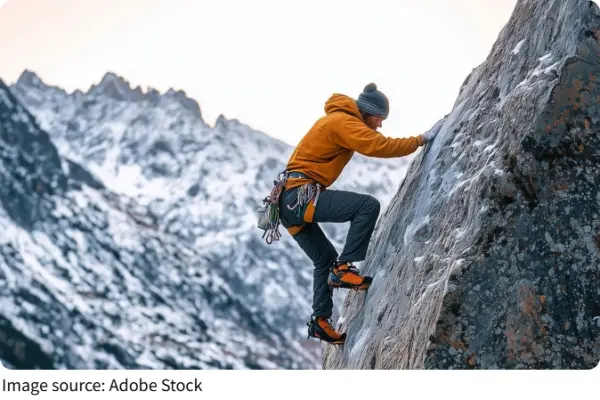
Rock climbing is more than a physical challenge—it is a mental journey.
Every grip, foothold, and upward movement demands not only strength but also focus and courage.
For many, standing at the base of a towering wall can trigger fear of heights, yet with deliberate practice, climbers learn to manage anxiety, sharpen concentration, and experience profound psychological growth.
1. Overcoming Fear of Heights
Fear of heights, or acrophobia, is common, but climbing offers a structured way to confront it. By starting with lower walls and gradually progressing to taller routes, climbers train the mind to remain calm under perceived danger. Techniques that help include:
1. Controlled breathing to reduce physiological anxiety responses
2. Visualizing each move before attempting it
3. Breaking routes into small, manageable sections
4. Practicing consistently to build confidence
Through repeated exposure in a safe environment, climbers learn to transform fear into focus, building trust in their own abilities.
2. Developing Focus and Managing Stress
Climbing requires intense concentration. The mind must simultaneously assess holds, body positioning, and balance, all while monitoring fatigue. This mental engagement functions like meditation in motion, training stress management skills. Key strategies include:
1. Mindful awareness of each movement to stay present
2. Setting small, achievable goals to prevent overwhelm
3. Using visualization to anticipate difficult moves
4. Maintaining positive self-talk to manage pressure
Mayo Clinic research on exercise and stress shows that mentally engaging physical activity, like climbing, reduces cortisol levels, helping individuals feel calmer and more in control.
3. Achieving Psychological Growth Through Challenge
Successfully completing a difficult route produces a surge of satisfaction and mental resilience. Climbers report improved confidence, enhanced problem-solving skills, and a sense of accomplishment that extends beyond the wall. The psychological benefits include:
1. Increased self-efficacy and belief in one's capabilities
2. Greater resilience when facing challenges outside climbing
3. Motivation to set and achieve ambitious goals
By pushing limits in a controlled environment, climbers experience a profound connection between effort, risk, and reward, reinforcing mental toughness.

Conclusion: Climbing as Mental Training
Rock climbing is a powerful tool for mental development. It teaches individuals to face fears, sharpen focus, manage stress, and celebrate achievements. Beyond physical strength, climbing nurtures resilience and courage, offering lessons that translate into everyday life. Each ascent is not just a journey up the wall, but a journey toward greater self-awareness and psychological growth.