Space Shuttle Discovery

Amit Sharma
| 20-04-2026
 · Science Team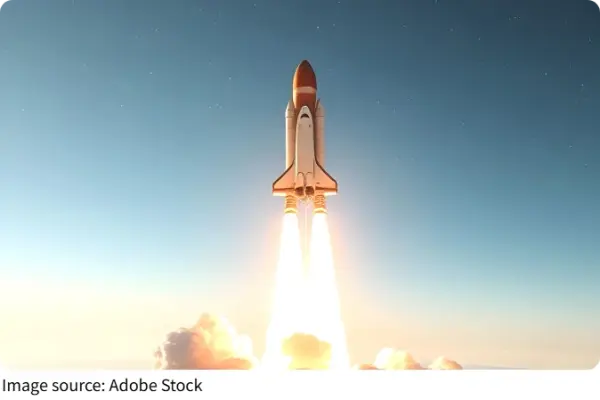
Introduction: The Iconic Shuttle
The Space Shuttle Discovery was one of NASA's most iconic spacecraft, playing a pivotal role in the United States' space program for over three decades.
As the third shuttle to be built, Discovery completed more missions than any other spacecraft in the Space Shuttle fleet. From launching satellites to deploying telescopes, its legacy is marked by numerous accomplishments that expanded humanity's understanding of space. Let's take a closer look at the key moments in Discovery's career and the technologies that made it a vital tool in space exploration.
The Origins of Space Shuttle Discovery
Space Shuttle Discovery was constructed in the early 1980s as part of NASA's initiative to create reusable spacecraft that could reduce the cost of space missions. Discovery was the third shuttle in the fleet, following the prototypes Columbia and Challenger. Its first launch took place in 1984, and from that point, it became the workhorse of NASA's shuttle program.
What set Discovery apart was its reliability and versatility. Over its operational life, it completed 39 missions, more than any other shuttle in history. Its missions varied from deploying satellites to supporting scientific research and even assisting in the construction of the International Space Station (ISS).
Key Missions and Achievements
Space Shuttle Discovery's missions were varied, but each one contributed significantly to advancing space exploration. Some of the most notable moments include:
1. Deployment of the Hubble Space Telescope
In 1990, Discovery played a crucial role in the deployment of the Hubble Space Telescope. The telescope has since revolutionized our understanding of the universe, providing breathtaking images and crucial data about distant galaxies, stars, and planets.
2. Construction of the International Space Station (ISS)
Discovery was instrumental in assembling the ISS, which serves as a collaborative platform for international scientific research in low Earth orbit. Discovery's missions to the ISS included the delivery of essential modules, solar arrays, and other components that are now part of the station.
3. Supporting Scientific Research
Discovery carried out a wide variety of scientific experiments. From studying the effects of zero gravity on the human body to conducting experiments on new materials in space, Discovery supported vital research that continues to benefit life on Earth.
The Technology Behind Discovery
The Space Shuttle Discovery was equipped with cutting-edge technology designed to make it reusable and versatile. The shuttle's unique design included a large payload bay that could carry satellites, scientific instruments, and space station components. It also had advanced avionics and a computer system that allowed for automated control during launch, orbit, and landing.
Discovery's main engines, known as the RS-25 engines, were responsible for propelling the shuttle into space. These engines, which were derived from the Space Shuttle's original design, were designed for reuse and could be refurbished between flights, making the shuttle program cost-effective compared to single-use spacecraft.
Additionally, the shuttle's heat shield technology, made of reinforced carbon-carbon tiles, protected it during re-entry into Earth's atmosphere, ensuring a safe return after each mission.
Retirement and Legacy
In 2011, Discovery completed its final mission, STS-133, delivering a new module to the ISS and closing out its illustrious career. The decision to retire the Space Shuttle program was made to shift focus to future space exploration initiatives, such as the Orion spacecraft, which aims to take humans back to the Moon and beyond.
Discovery's legacy, however, continues to live on. After its retirement, the shuttle was moved to the Smithsonian National Air and Space Museum's Steven F. Udvar-Hazy Center in Virginia, where it is displayed as a symbol of American innovation and the spirit of exploration.
Key contributions of Discovery:
1. Advanced space technology: Development of reusable spacecraft and payload capabilities.
2. International collaboration: Helped assemble the ISS and foster international cooperation in space.
3. Pioneering science: Enabled groundbreaking scientific experiments and observations.
4. Public inspiration: Inspired generations of scientists, engineers, and space enthusiasts.
The Impact of Discovery on Future Space Exploration
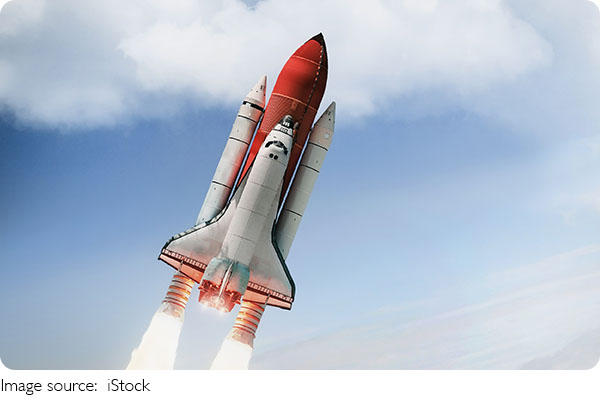
Discovery's impact on space exploration is immeasurable. The shuttle program showed that human spaceflight could be sustainable and repeatable. It laid the groundwork for future missions, from the construction of the ISS to the development of next-generation space vehicles. Discovery proved that reusable spacecraft could reduce costs and provide more access to space, a lesson that continues to shape the development of modern space missions.
In particular, the technological advances made during the shuttle program have had a lasting influence on the commercial space industry. Companies like SpaceX and Blue Origin are using similar reusable rocket technologies to make space more accessible to private companies and tourists alike. Discovery's legacy as a symbol of innovation and exploration continues to inspire the next generation of space travelers.
Conclusion: A Monument to Human Achievement
The Space Shuttle Discovery's missions, technological innovations, and legacy are etched into the history of space exploration. As NASA transitions to new forms of space travel, the lessons learned from the shuttle program will continue to shape the future of human spaceflight. Discovery, with its unmatched record of service, represents not only the triumphs of the past but also the promise of what lies ahead in humanity's journey into the stars.