Tree Climbing Secrets

Chandan Singh
| 09-08-2026
 · Animal Team
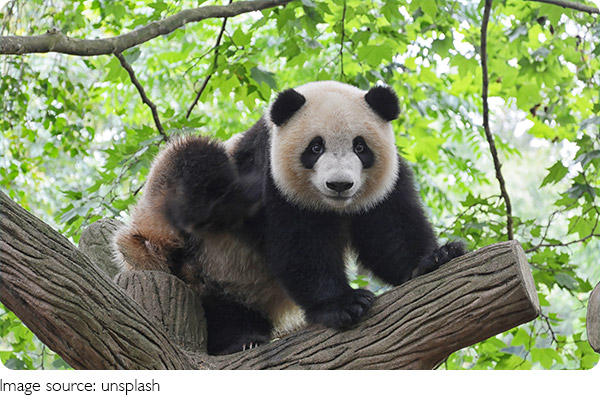
When we see a giant panda climbing a tree, the scene can be both funny and fascinating. We usually imagine these animals sitting among bamboo and spending long hours on the ground.
But young pandas often show a different side, using their strong limbs and careful movements to climb higher into the trees.
When we look closely at this habit, we can see that climbing is more than simple play. Trees can give pandas a quiet place to rest, a wider view of their surroundings, and a useful space to practice balance and movement. For young pandas, each climb can also be part of learning how to live in the forest.
A Safe Place Above
When we imagine life in a thick forest, we can understand why getting higher can sometimes be useful. A panda on the ground has limited visibility because plants, rocks, and fallen branches can block its view. By climbing a tree, it can gain a wider view of the area around it.
For a young panda, this can be especially helpful. If it notices something unusual nearby, moving upward can give it extra space and time to respond. Tree branches can also create a natural separation between the animal and activity happening below.
A Quiet Resting Spot
We may think of climbing as hard work, but trees can also become comfortable places for pandas to relax. After spending hours searching for and eating bamboo, a panda needs plenty of time to rest.
A strong tree with suitable branches can provide a raised resting area away from damp ground. Depending on the weather and location, being above the forest floor may also offer a cooler or more comfortable position.
Young pandas are often especially active around trees. They may climb, pause on a branch, and then carefully move higher or lower. Through these simple movements, they become familiar with their surroundings.
Growing Through Practice
Climbing also gives pandas a natural way to develop physical skills. We can see several movements working together when a panda climbs: its front limbs grip the trunk, its rear limbs push upward, and its body shifts to maintain balance.
For young pandas, every climb can be a small lesson. They learn how much force to use, where to place their limbs, and how to move between branches. A short climb may look simple to us, but it requires coordination and careful control.
Over time, these repeated movements help build strength and confidence. We can think of tree climbing as part of a young panda's everyday learning process.
A Useful Forest Skill
Pandas live in forest environments where trees, bamboo, slopes, and rocks all form part of their surroundings. Being able to move between different levels gives them more choices when they explore.
We can also see how climbing ability changes with age. Young pandas are generally more energetic and curious, so they may spend more time testing their climbing skills. As they grow larger, their heavier bodies can make certain branches less suitable, and they may rely more on the ground.
This shows us that climbing is connected with age, body size, strength, and the conditions around each animal.
More Than Simple Play
At first glance, a panda climbing a tree may look like a funny scene. We might even wonder why such a large animal would choose to climb when it could simply stay on the ground.
However, when we look at the full picture, the behavior makes much more sense. Climbing can provide a higher viewpoint, a resting location, physical practice, and another way to move through the forest.
For young pandas in particular, climbing can combine play and learning. A tree becomes more than a piece of the landscape. It becomes a place where they can test their abilities and understand their surroundings.

What Trees Teach Us
Lykkers, the next time we see a giant panda climbing a tree, we can look beyond its cute appearance. We can notice how carefully it grips the trunk, how it chooses each branch, and how it adjusts its body while moving.
These small details remind us that animal behavior often has several purposes at the same time. A simple climb can involve safety, rest, movement, learning, and adaptation.
By paying attention to these everyday behaviors, we can understand pandas in a more complete way. So, what do you think is the most interesting part of a panda's tree-climbing ability: its balance, strength, or curious nature? Share your thoughts, Lykkers, and let's keep discovering the fascinating world of wildlife together.
Why Do Pandas Climb Trees?
Video by Smithsonian Channel