Tanoura: The Art of Spin

Vivienne
| 01-09-2026
 · Art Team
Tanoura is a distinctive Egyptian performance recognized for its colorful costumes, rhythmic choreography, and continuous rotation.
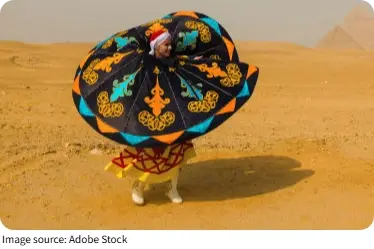
As the dancer turns, layers of fabric spread outward, creating broad circular patterns that change throughout the routine.
The performance combines costume, movement, music, timing, and coordination to create a visually engaging form of cultural expression.
The Tanoura Skirt
The skirt is the defining visual element of the performance. Made from multiple layers of fabric, it expands outward as the dancer rotates, revealing vivid colors and detailed patterns. Different sections can be raised, lowered, opened, or repositioned, allowing the costume to become an active part of the choreography.
Controlling the fabric requires practice and coordination. The dancer must manage its movement while maintaining consistent footwork, posture, and rhythm. This relationship between performer and costume gives Tanoura much of its distinctive visual character.
Movement and Choreography
Tanoura is more than continuous rotation. The performance develops through a sequence of coordinated movements that gradually introduce different positions and gestures. The dancer works with the rhythm of the accompanying music while controlling the costume and maintaining a consistent performance pattern.
Changes in arm position and fabric placement can alter the appearance of the skirt from one moment to the next. These transitions create variety without interrupting the overall flow of the routine.
Color and Visual Expression
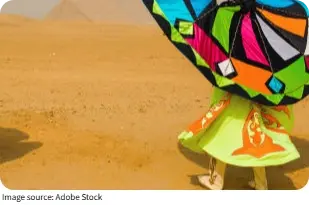
The expanding layers of fabric create Tanoura's most recognizable visual effect. As the costume opens outward, individual colors form broad bands and circular designs that shift with every movement.
The combination of bright fabric, rhythmic motion, and changing shapes gives the performance its visual energy. Rather than relying on elaborate scenery, Tanoura places the dancer and costume at the center of the presentation.
Tanoura in Cairo
Tanoura can be experienced in cultural settings across Cairo, including historic venues in the city's old district. The Al-Ghuri Wikala is one such setting, offering an atmospheric architectural backdrop for cultural performances.
The historic complex dates from the early sixteenth century and forms part of Cairo's architectural heritage. Visitors interested in attending a performance should check current venue information, as schedules and visitor arrangements may change.
The Skill Behind the Performance
The apparent simplicity of Tanoura conceals a high level of coordination. The dancer must maintain rhythm while controlling several layers of moving fabric and carrying out carefully practiced movements.
Successful performances depend on consistency, timing, posture, and familiarity with the choreography. The costume is not simply an accessory; its movement is integrated into the performance and helps shape the visual experience.
Tanoura brings together color, rhythm, costume, and controlled movement to create a distinctive Egyptian performance. The expanding fabric produces constantly changing patterns while the dancer maintains a carefully coordinated routine. This combination of visual design and practiced movement gives Tanoura its enduring appeal and makes it a memorable expression of Egyptian cultural performance.