Cats Kids Friendship

Maya
| 30-09-2026
 · Animal Team
Dear Lykkers, watching a child and a cat slowly become comfortable with each other can be a lovely part of family life.
Their friendship does not usually happen all at once. Children need to learn how to approach a cat gently, while cats need time to understand a child’s movements, voice, and energy.
With patient guidance, everyday routines, and plenty of respect for personal space, children and cats can develop a warm and trusting relationship that makes life at home more enjoyable for everyone.
Start With Respect
The first lesson children should learn is that every cat has its own personality. Some cats enjoy being touched and staying close, while others prefer watching from a comfortable distance. Children should understand that a cat does not always want to be picked up, followed, or touched.
Teach children to watch the cat’s behavior instead of assuming that every moment is a good time for interaction. If the cat moves away, hides, becomes tense, or seems uncomfortable, children should stop and give it space. Learning to respect these signals helps children understand that friendship also means knowing when to step back.
Make Interaction Gentle
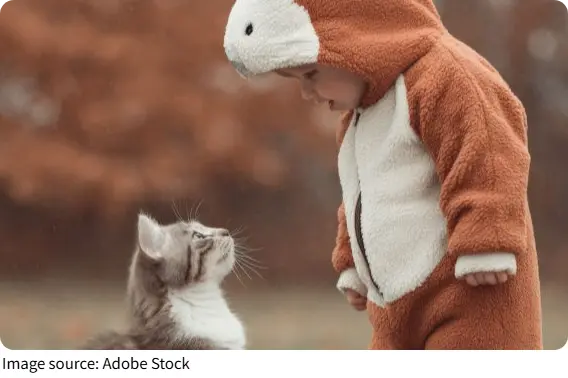
Young children can become excited when playing with a cat, so a parent or caregiver should supervise their early interactions. Show children how to use gentle movements and soft touches. They can begin by sitting quietly near the cat and allowing it to approach on its own.
Playtime should also be calm and controlled. Choose suitable cat toys and teach children not to pull at a cat’s tail, ears, or fur. Avoid chasing games that can make the cat nervous. Short, peaceful interactions are often more successful than trying to keep the cat engaged for a long time.
Give the Cat Its Own Space
A cat should always have a quiet place where it can rest without being disturbed. This could be a comfortable bed, a small resting area, or another location that children understand is off-limits during the cat’s private time.
This space is especially useful when the household becomes noisy or busy. Children should learn that when the cat is resting in its own area, they should leave it alone. Giving a cat control over its personal space can make everyday interactions more relaxed.
Teach Children About Cat Behavior
Understanding basic cat behavior can make a big difference. Children can learn that cats communicate through their ears, tails, posture, movements, and sounds. These signals can help them recognize whether a cat is relaxed, curious, or ready to be left alone.
Parents can turn this into a simple learning activity. Ask children what they notice when the cat approaches them or moves away. Instead of encouraging them to touch the cat immediately, teach them to observe first. This helps children become more patient and attentive.
Build Responsibility Slowly
Caring for a cat can also teach children responsibility, but tasks should match their age and abilities. Younger children might help measure food with a parent, refresh water, or put toys away after playtime. Older children may be able to take part in more regular care under supervision.
The goal is not simply to give children chores. It is to help them understand that a pet depends on people for daily care. Consistent routines can also create more opportunities for children and cats to become familiar with each other.
Create Safe Family Routines
A safe home benefits both children and cats. Keep small objects and potentially dangerous household items out of reach, and make sure the cat has easy access to its food, water, resting area, and litter area without being disturbed.
Family rules should be simple and consistent. Children should know where they can interact with the cat, how gently they should behave, and when they need to leave the cat alone. When everyone follows the same rules, the cat can become more confident and children can better understand what is expected of them.
Let Friendship Develop Naturally
The strongest bond between a child and a cat cannot be forced. Some cats become affectionate quickly, while others need much more time. Children should learn that waiting quietly can sometimes be the best way to build trust.
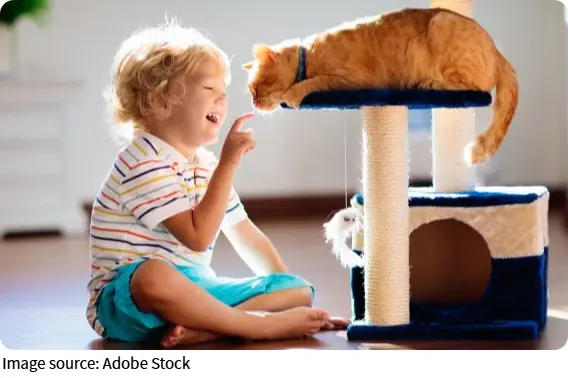
Over time, simple moments such as sitting together, gentle play, or calmly sharing the same room can become meaningful parts of their relationship. By respecting boundaries, encouraging kindness, and supervising interactions, families can create an environment where both children and cats feel secure.
Final Thoughts
A close relationship between a child and a cat grows through patience rather than pressure. When children learn to recognize a cat’s needs and respond with care, they gain more than a playmate. They also practice responsibility, observation, patience, and empathy. With clear family rules and plenty of time, a child and cat can gradually develop a friendship that feels comfortable and natural for both.