Wood, Wire, and Sound

Liam Reilly
| 27-11-2026
 · Art Team
Hey Lykkers! There is something almost magical about the kalimba. You hold a small wooden block in your hands, brush your thumbs across a row of metal tines, and suddenly you have a sound that is warm, gentle, and deeply soothing. It looks simple, and in many ways, it is.
But the journey from raw materials to a finished instrument is a fascinating blend of woodworking skill, metal precision, and a deep understanding of how sound works. Let's take a closer look at how these beautiful instruments are made.
The Heart of the Instrument: Choosing the Wood
Everything starts with the wood. The body of a kalimba does more than just hold the parts together. It acts as a resonator, shaping the tone and giving the instrument its voice. The type of wood used makes a huge difference.
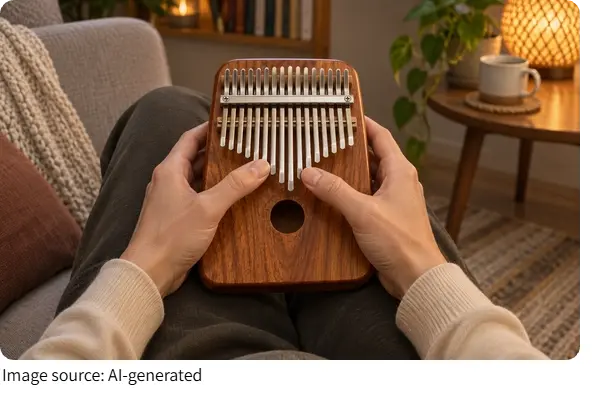
Makers often choose hardwoods like mahogany, koa, or walnut. These woods are dense and stable, which means they can handle the tension of the metal tines without warping over time. They also have a beautiful grain pattern that makes each kalimba visually unique.
The wood is cut into a block or a box shape. Some kalimbas are solid blocks, while others are hollow boxes with a sound hole. The hollow box style tends to produce a louder, more resonant sound, while solid blocks offer a more compact, focused tone.

Shaping and Sanding: The Art of the Body
Once the wood is selected, it is cut to the basic shape. This is where the maker's skill really comes into play. The block needs to be perfectly flat on the top, where the tines will sit, and comfortable to hold in the hands.
The wood is then sanded smooth. This is not just about looks. A smooth surface feels better to play and helps the instrument resonate more freely. Many makers apply a natural oil or wax finish to protect the wood and bring out its natural beauty. Some even add decorative carvings or inlays, turning the kalimba into a small piece of art.
The Metal Tines: Precision and Pitch
The tines, or keys, are the part you actually play. They are usually made of spring steel, a type of metal that is strong, flexible, and holds its shape well.
The length, thickness, and shape of each tine determine its pitch. A longer, thinner tine produces a lower note. A shorter, thicker tine produces a higher note. Makers carefully cut and shape each tine to precise measurements. Even a tiny difference in length can change the pitch significantly.
Once the tines are cut, they are often bent slightly at the end. This bend helps the tine vibrate freely and gives the kalimba its characteristic buzzing or shimmering sound. Some makers add a small piece of metal or a bead near the bridge to create a subtle buzz effect, which is a traditional feature of many African thumb pianos.
Assembling the Instrument
With the wood body prepared and the metal tines shaped, it is time to put everything together. The tines are placed on top of a metal bridge, which sits on the wooden body. A metal piece is then placed across the tines and fastened down tightly. This holds the tines in place and allows them to vibrate.
The placement of the bridge is crucial. It affects how the tines vibrate and how the sound travels through the wood. Makers spend a lot of time getting this just right. Once the tines are secure, the instrument is tuned. This is done by carefully filing or adjusting the length of each tine until it produces the correct note.
Fine-Tuning and Final Touches
Tuning a kalimba is a delicate process. The maker uses a tuning hammer or a file to adjust each tine. They listen closely to the pitch and make tiny adjustments until the scale is perfect.
After tuning, the instrument is checked for any issues. The maker plays it to make sure every tine sounds clear and that there are no unwanted rattles. Finally, the kalimba is cleaned, polished, and packed, ready to find its way to a new home.
Final Thoughts
Making a kalimba is a beautiful blend of art and science. It requires an understanding of wood, metal, and sound. It also requires patience and a steady hand. Every kalimba is a little different, shaped by the wood it is made from and the hands that built it. The next time you hold one and play a gentle melody, take a moment to appreciate the craftsmanship behind it. It is not just a simple instrument. It is a small piece of carefully crafted magic.
how i make kalimbas
Video By "Kalimba workshop"